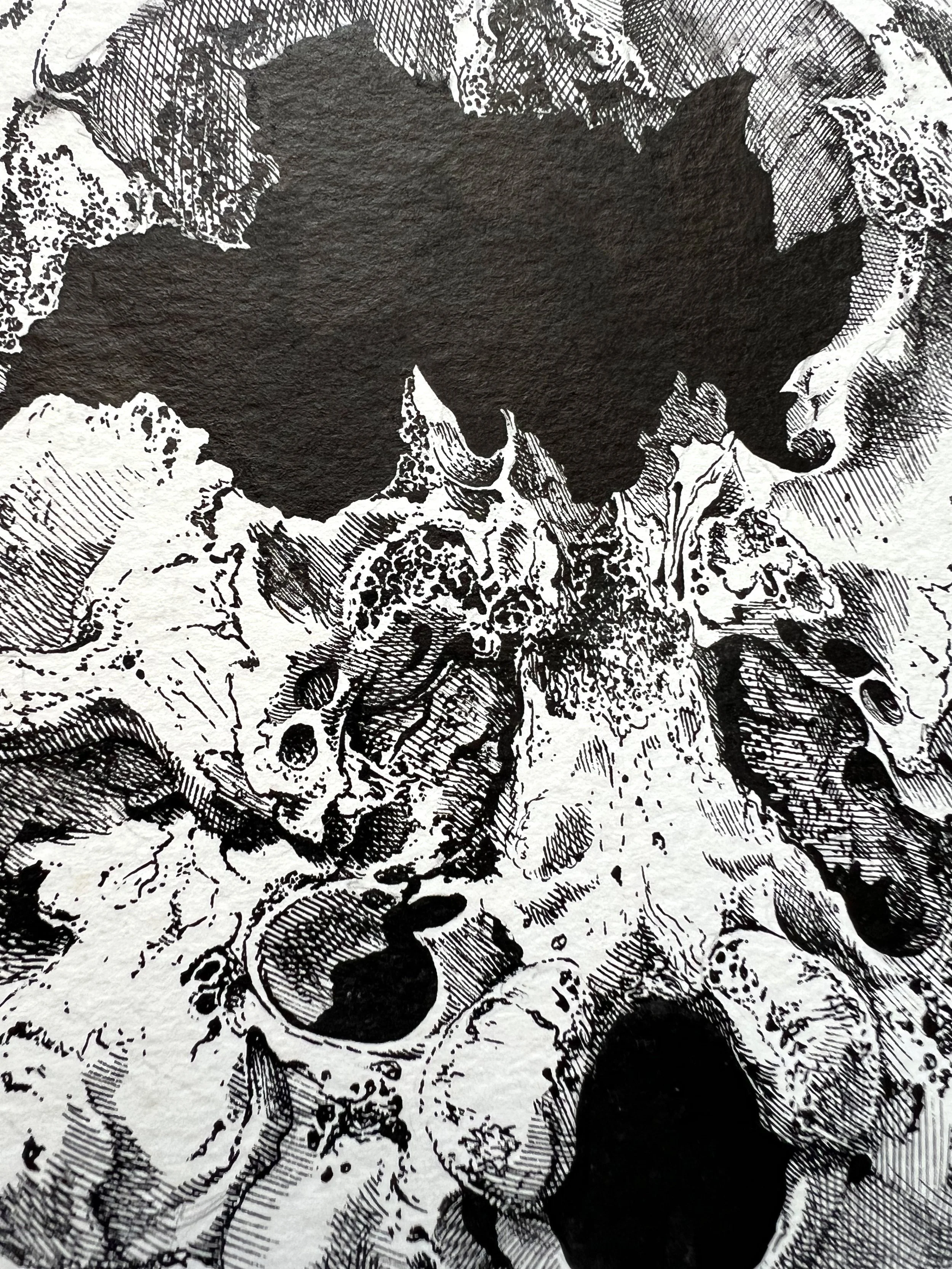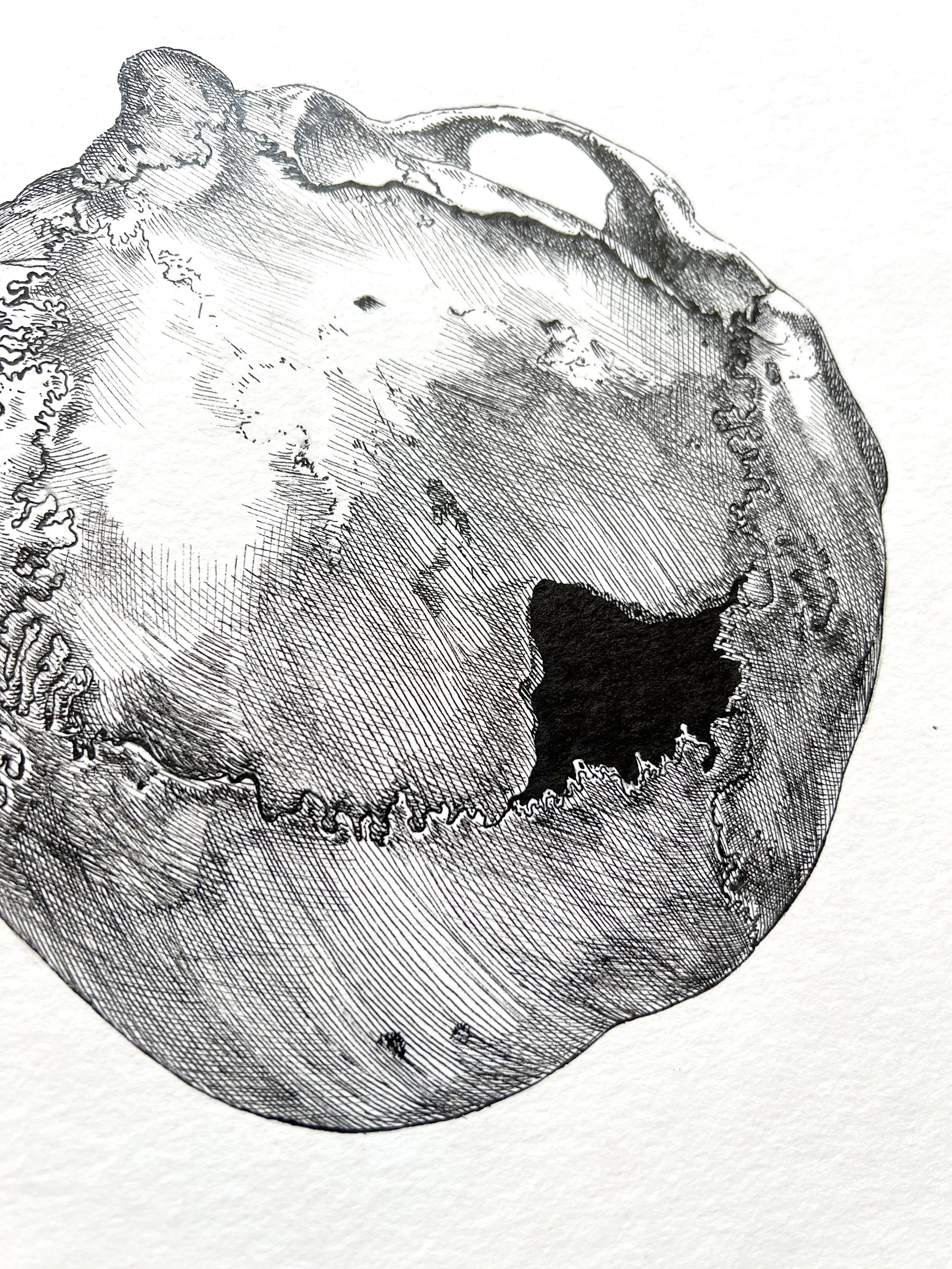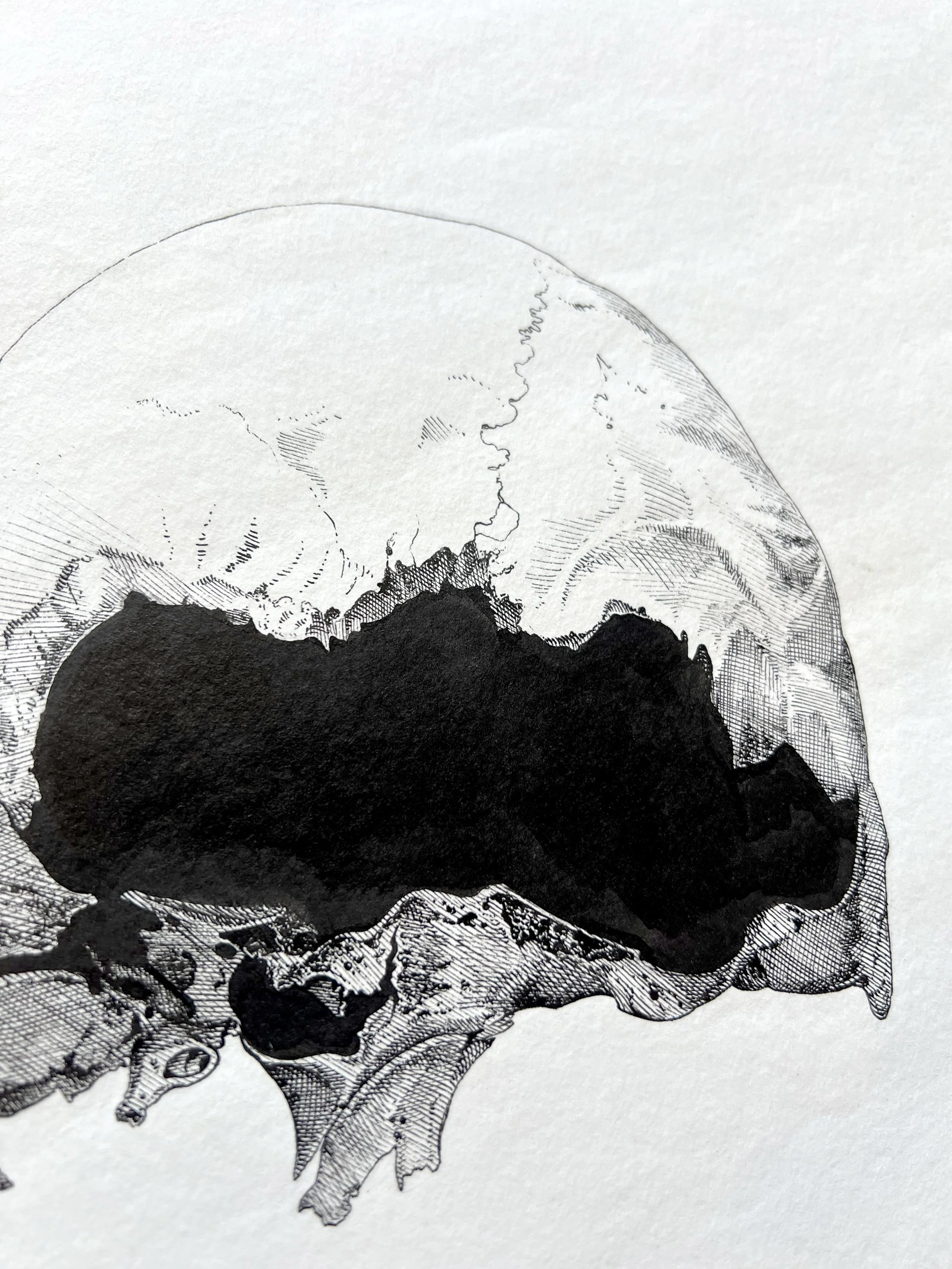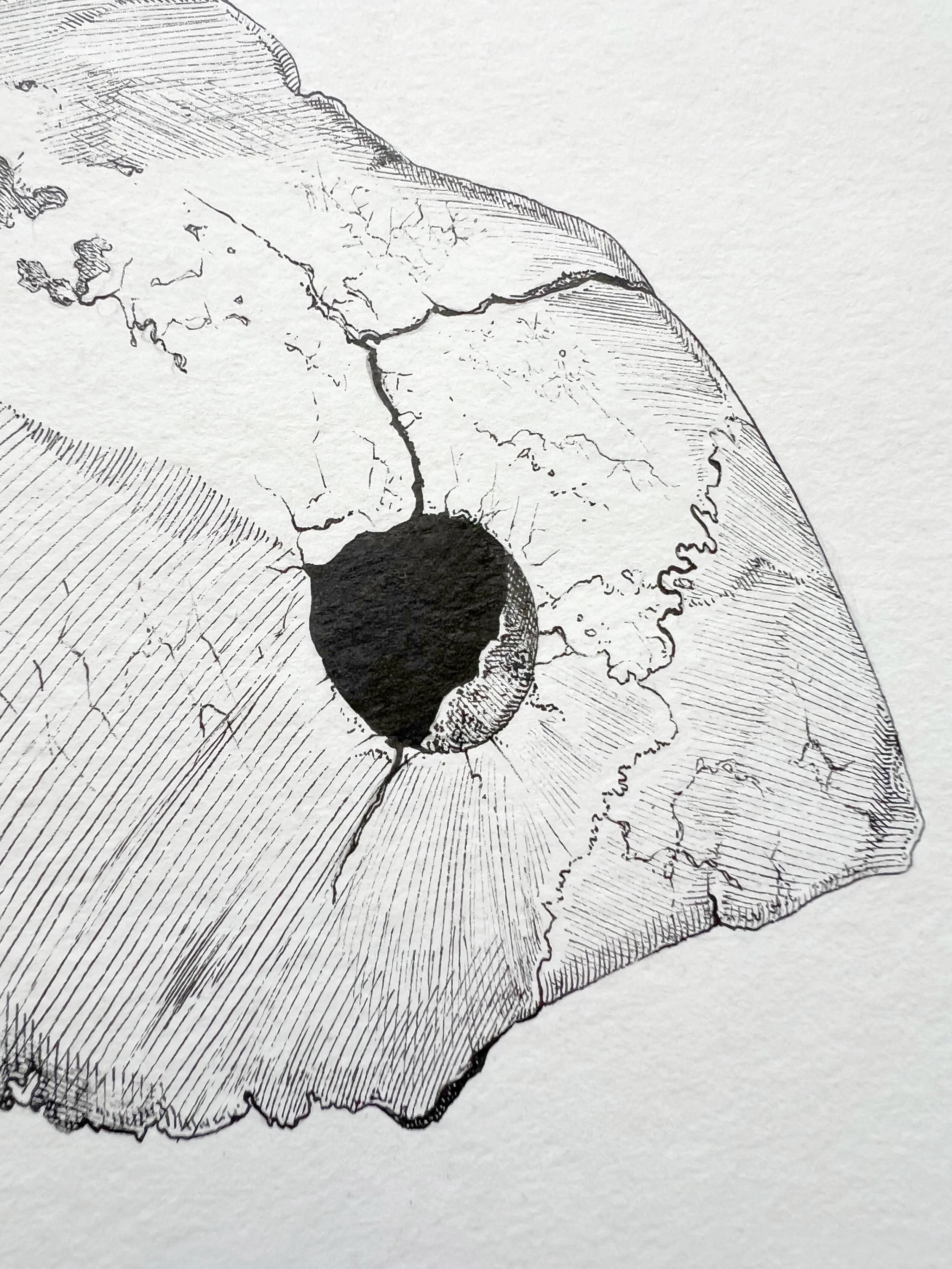
Image 1 of 2
Image 2 of 2
The Two Natures
[This piece has been featured in IAO: Ophite Iconography, p.150.]
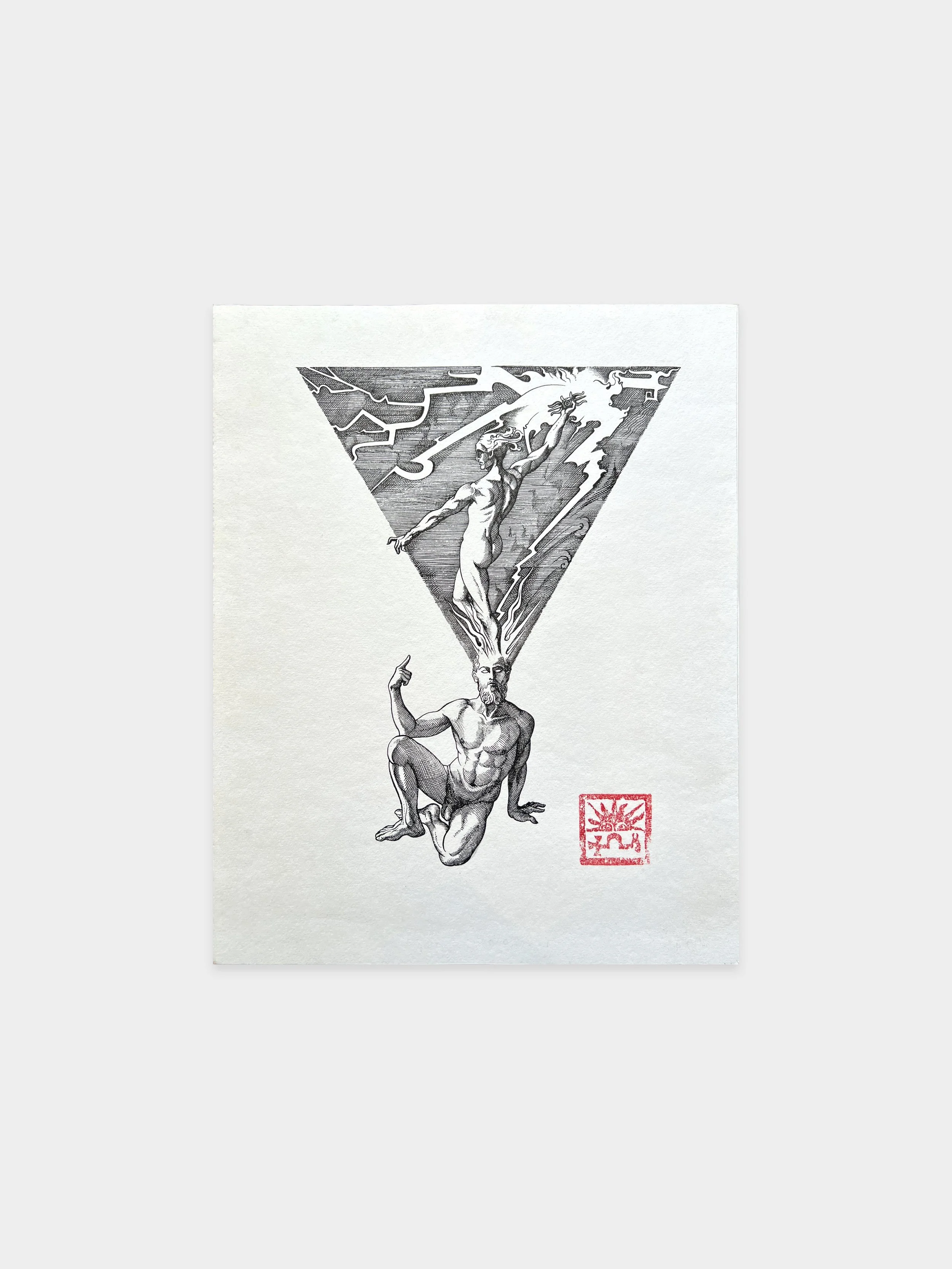
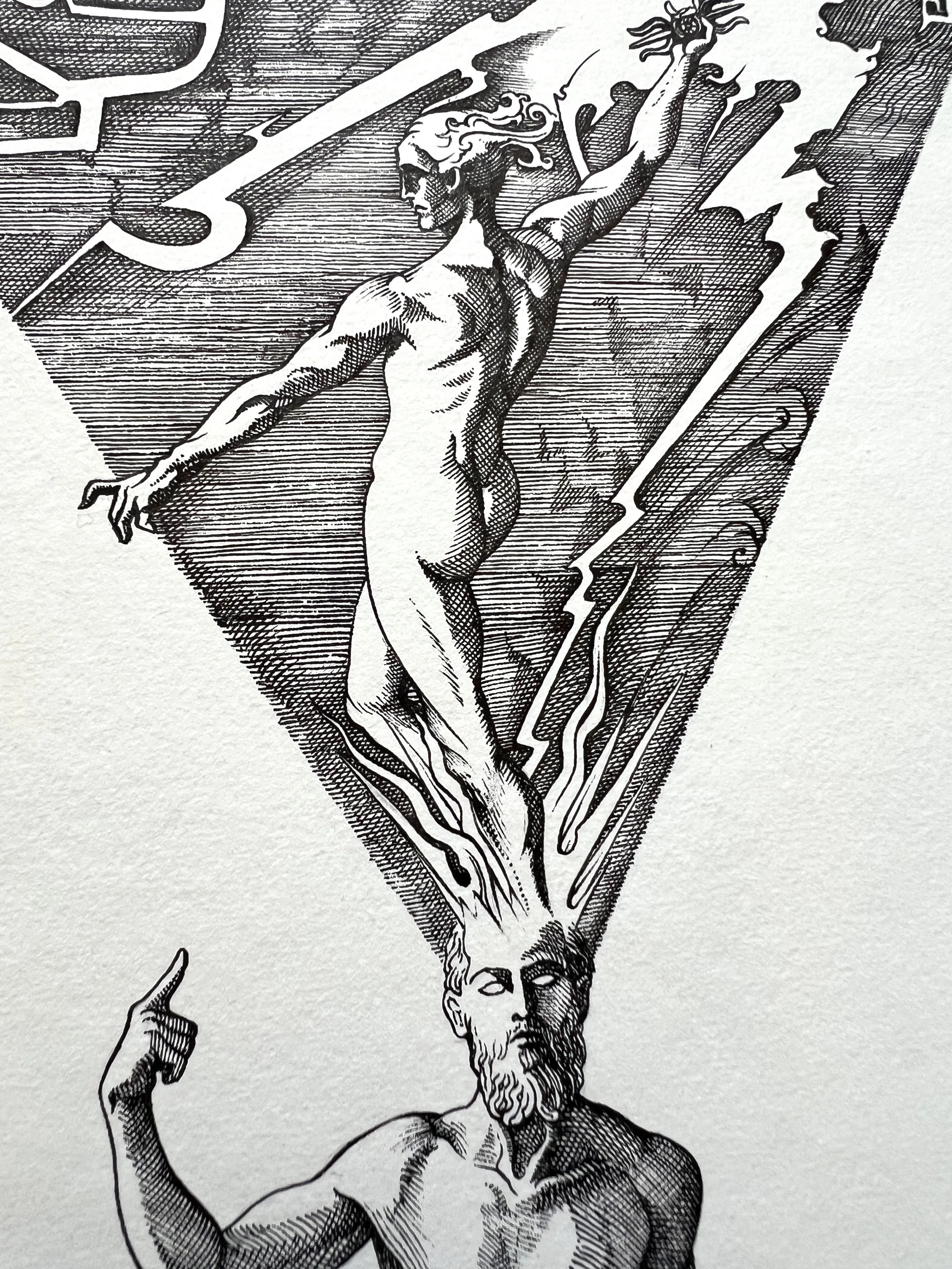
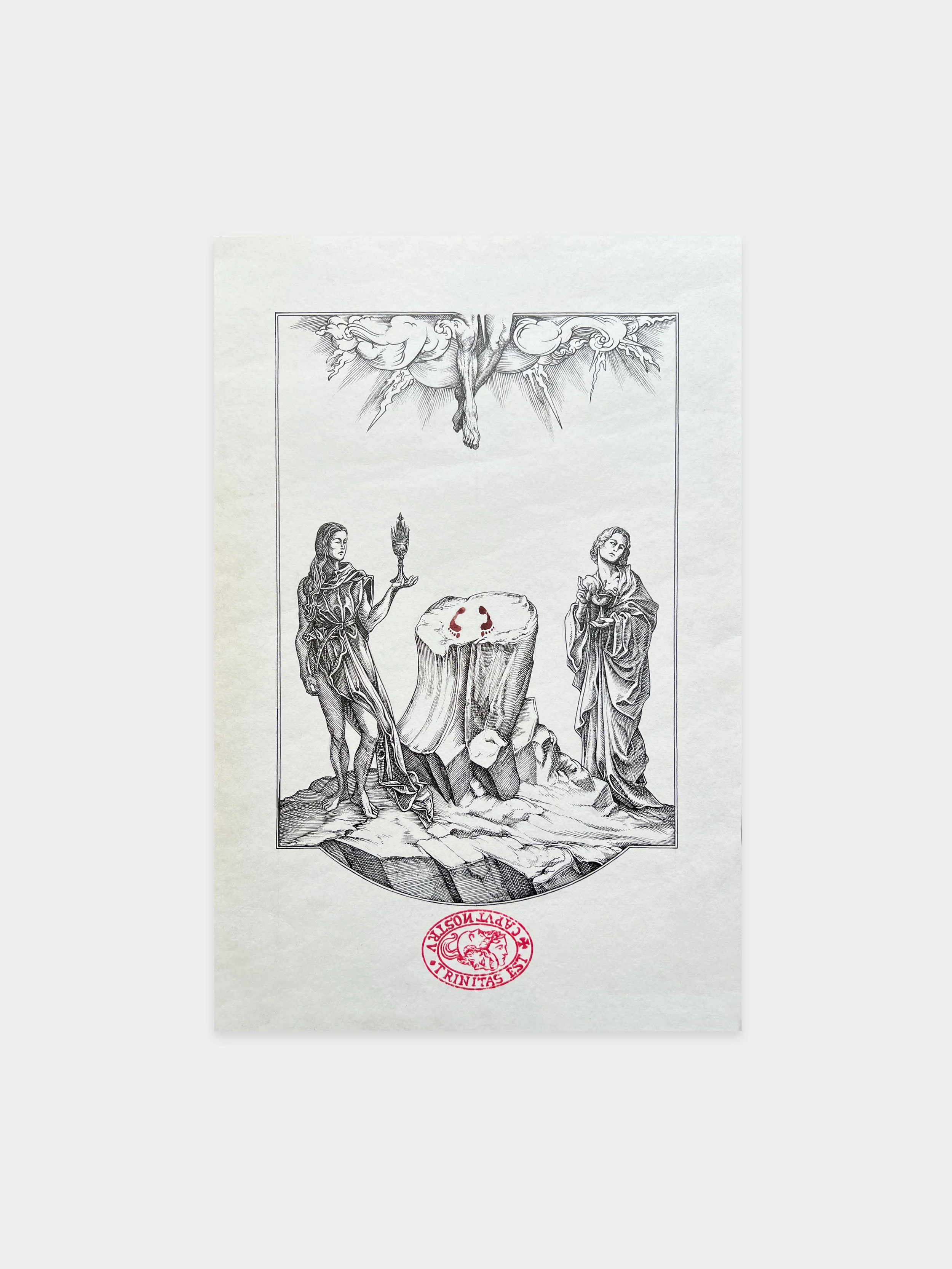
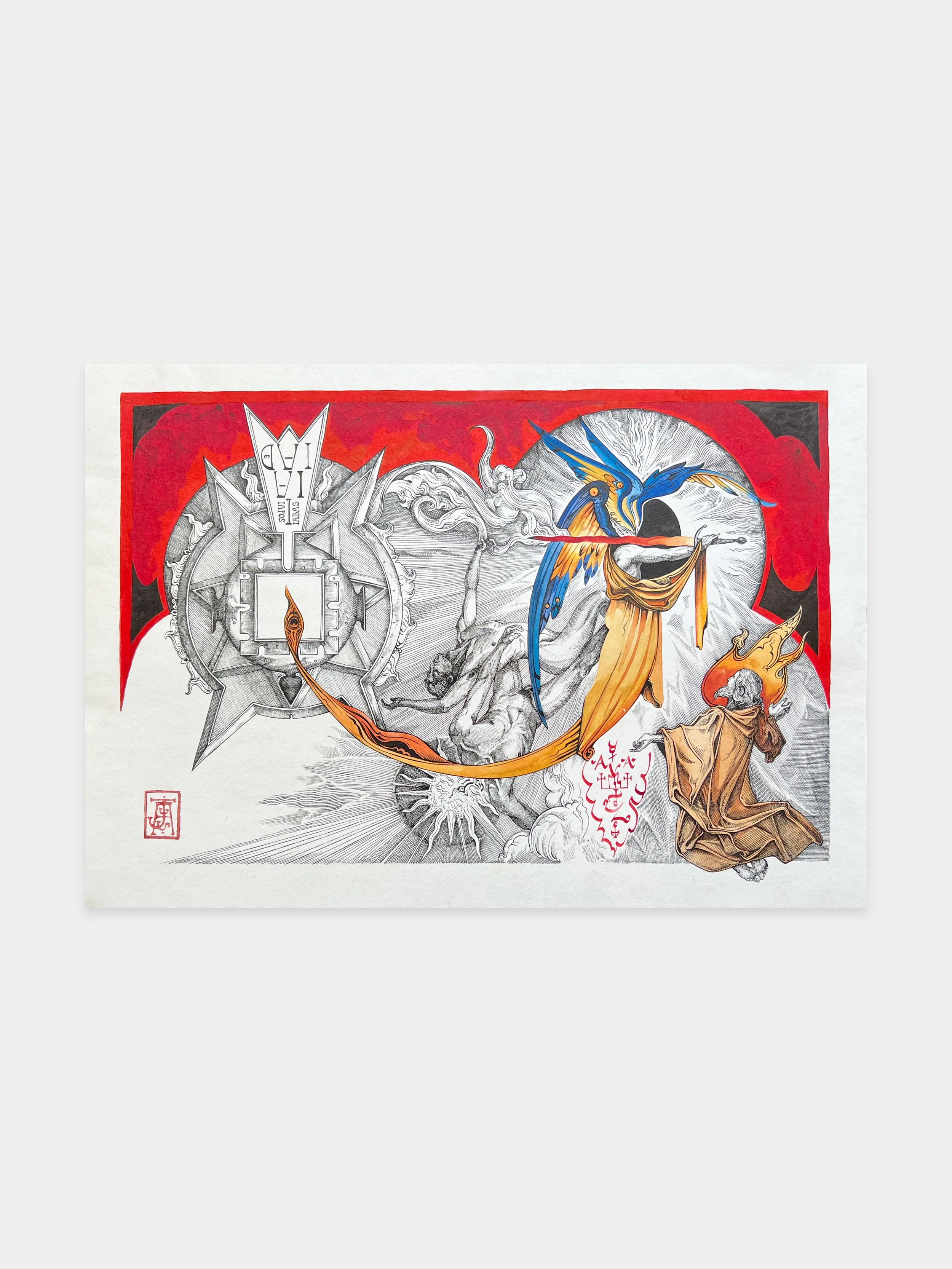
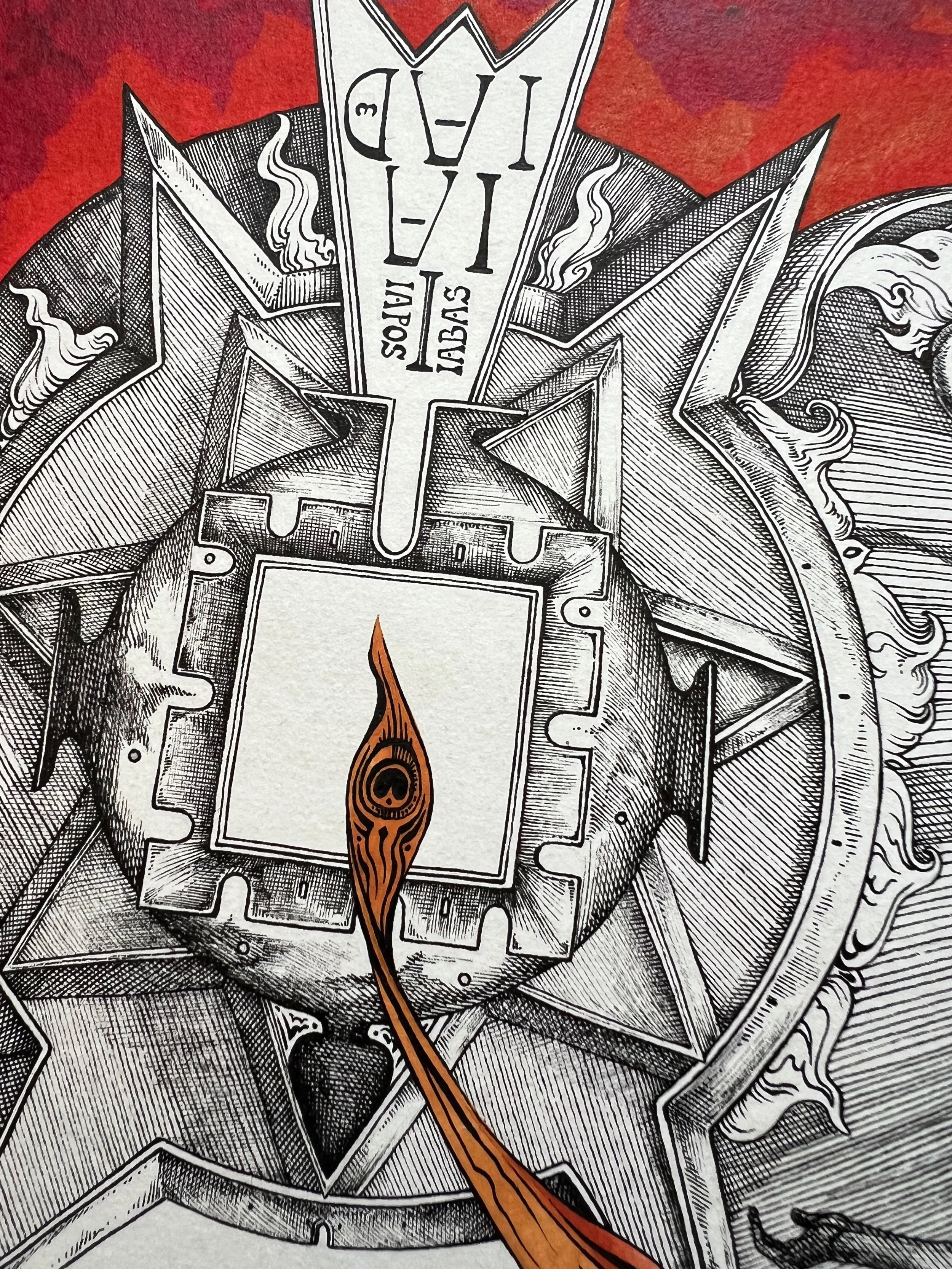
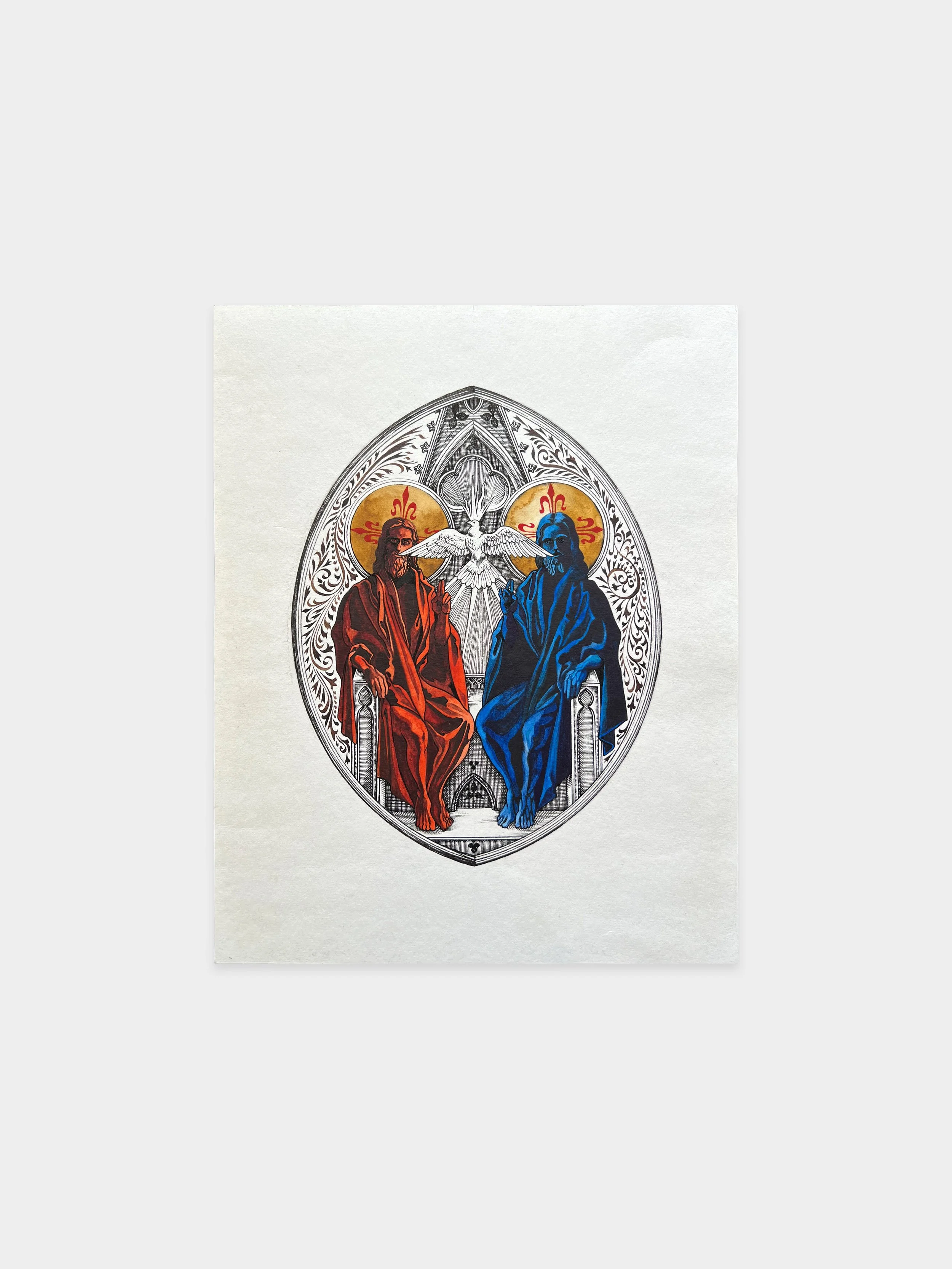
Duality is probably the most dangerous concept for Monotheism, and precisely the Trinity has been explained as allowing a regression to unity, since a triangle has a center, how then is this possible?
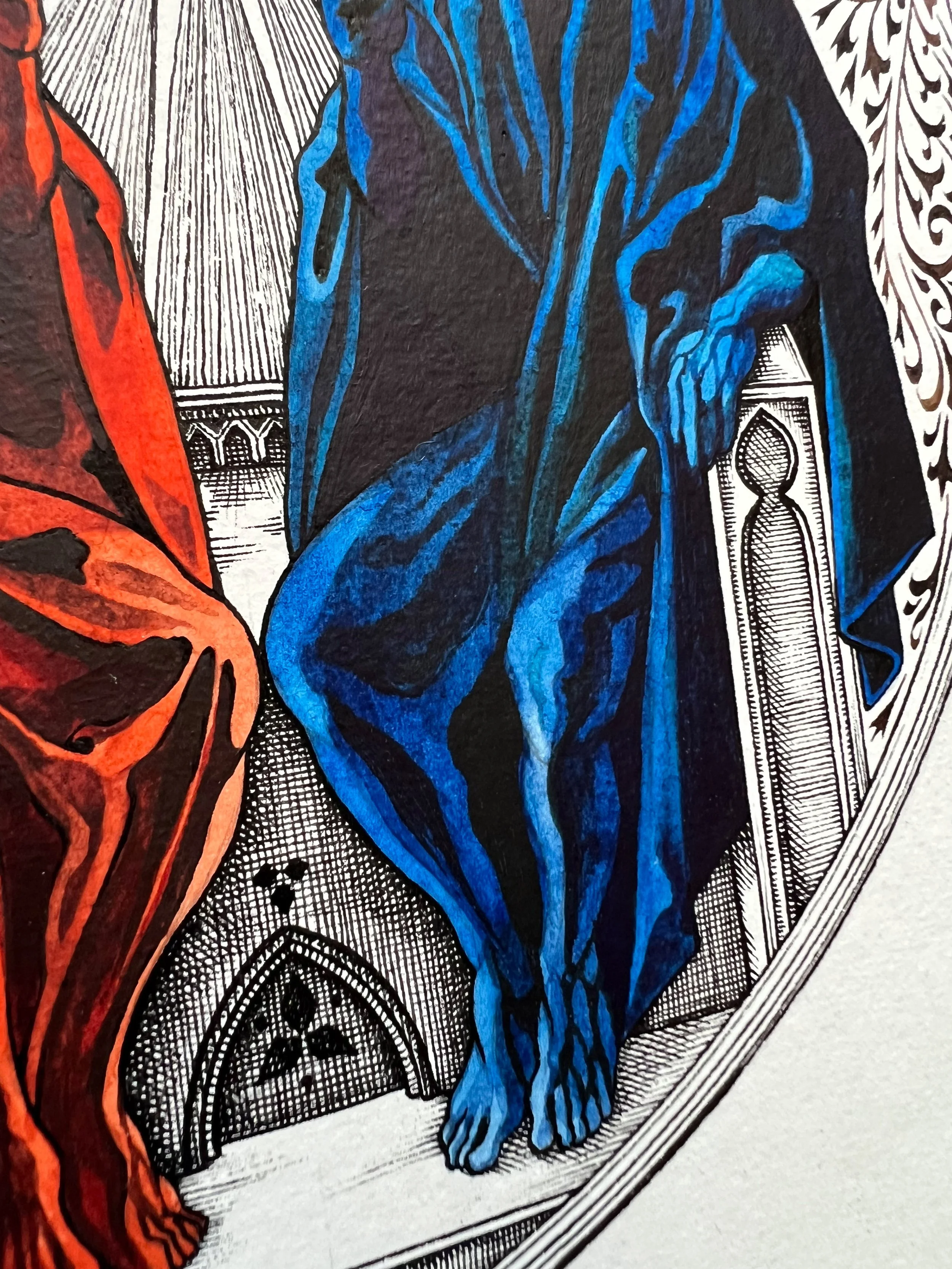
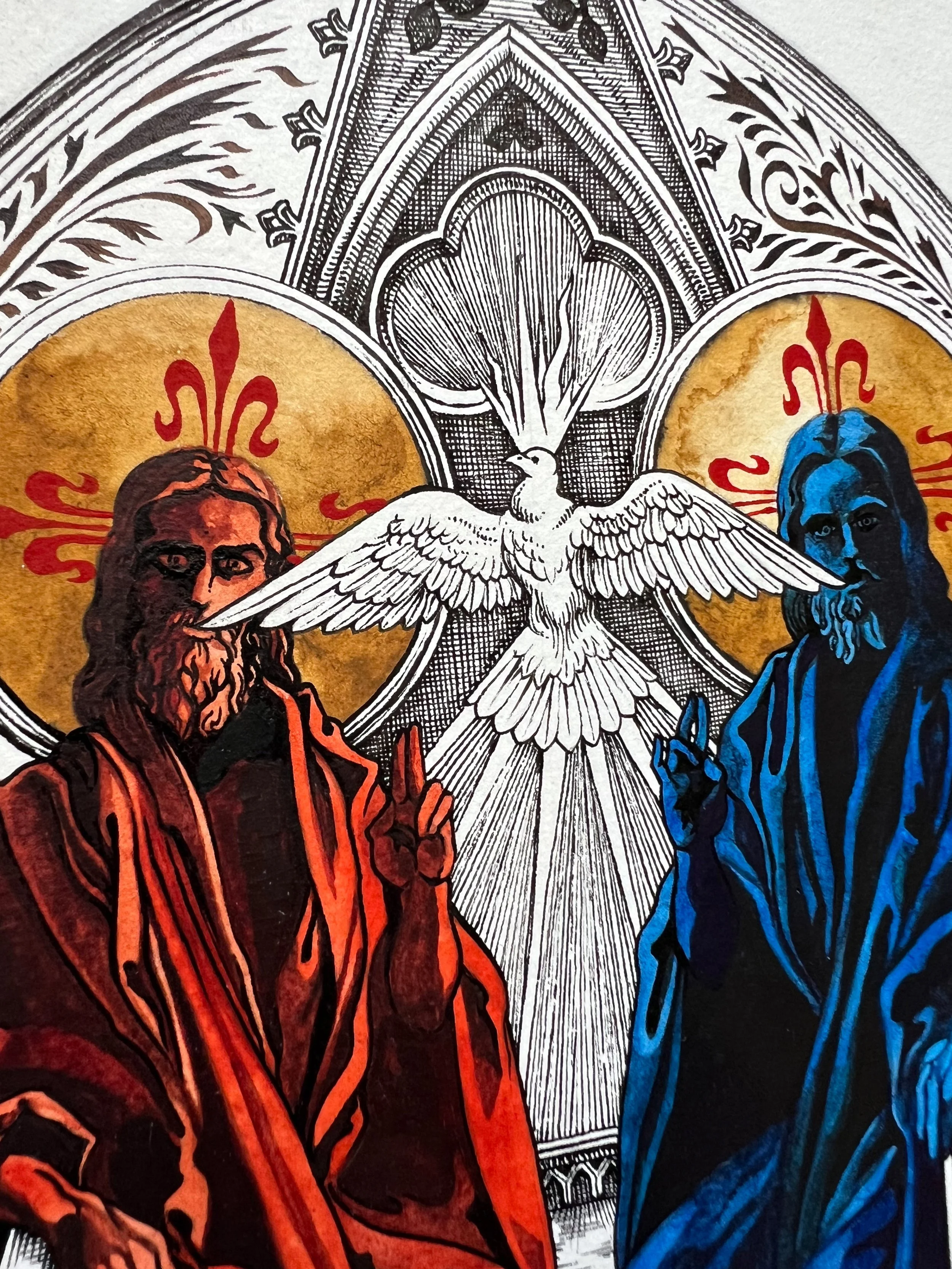
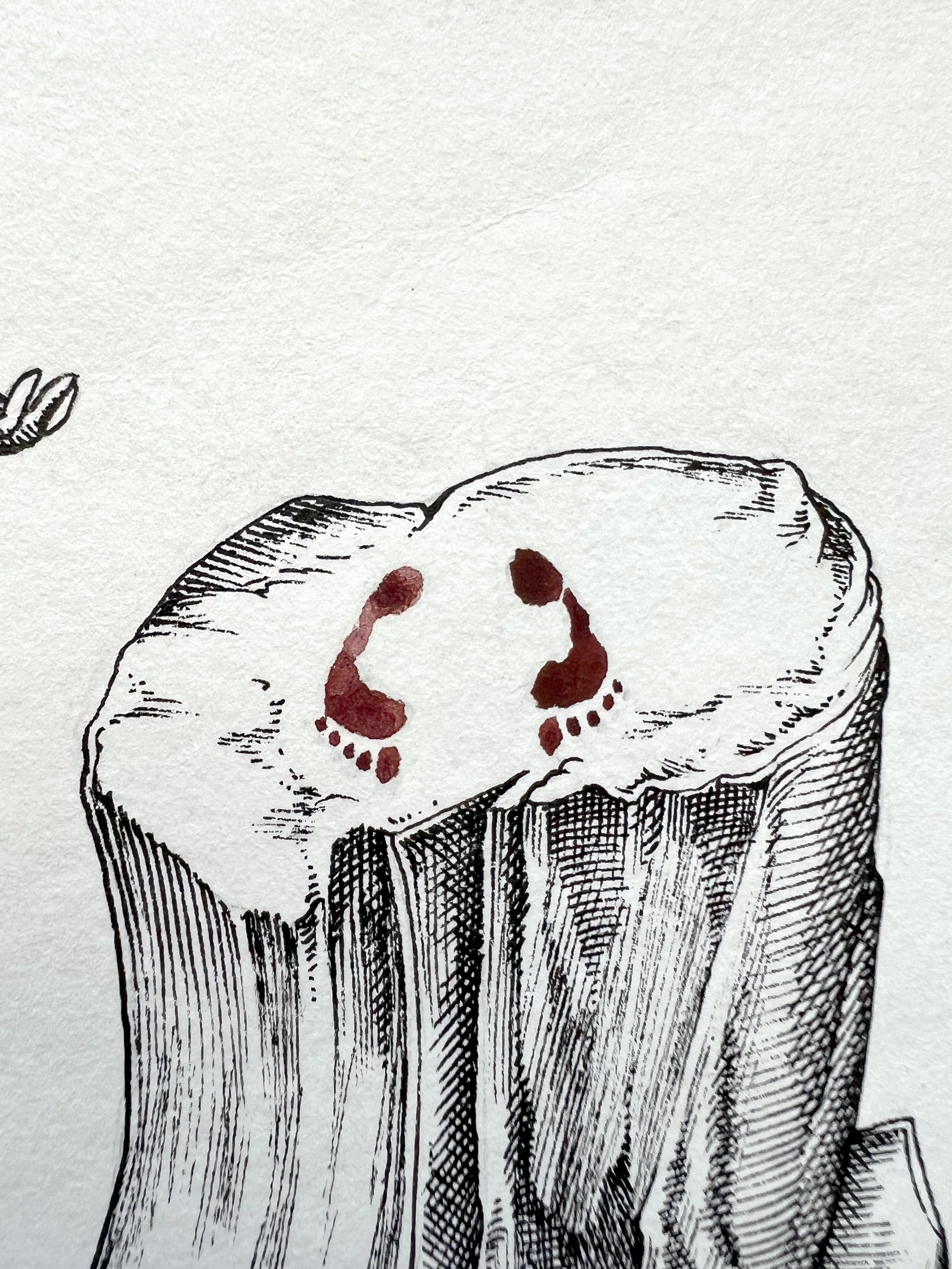
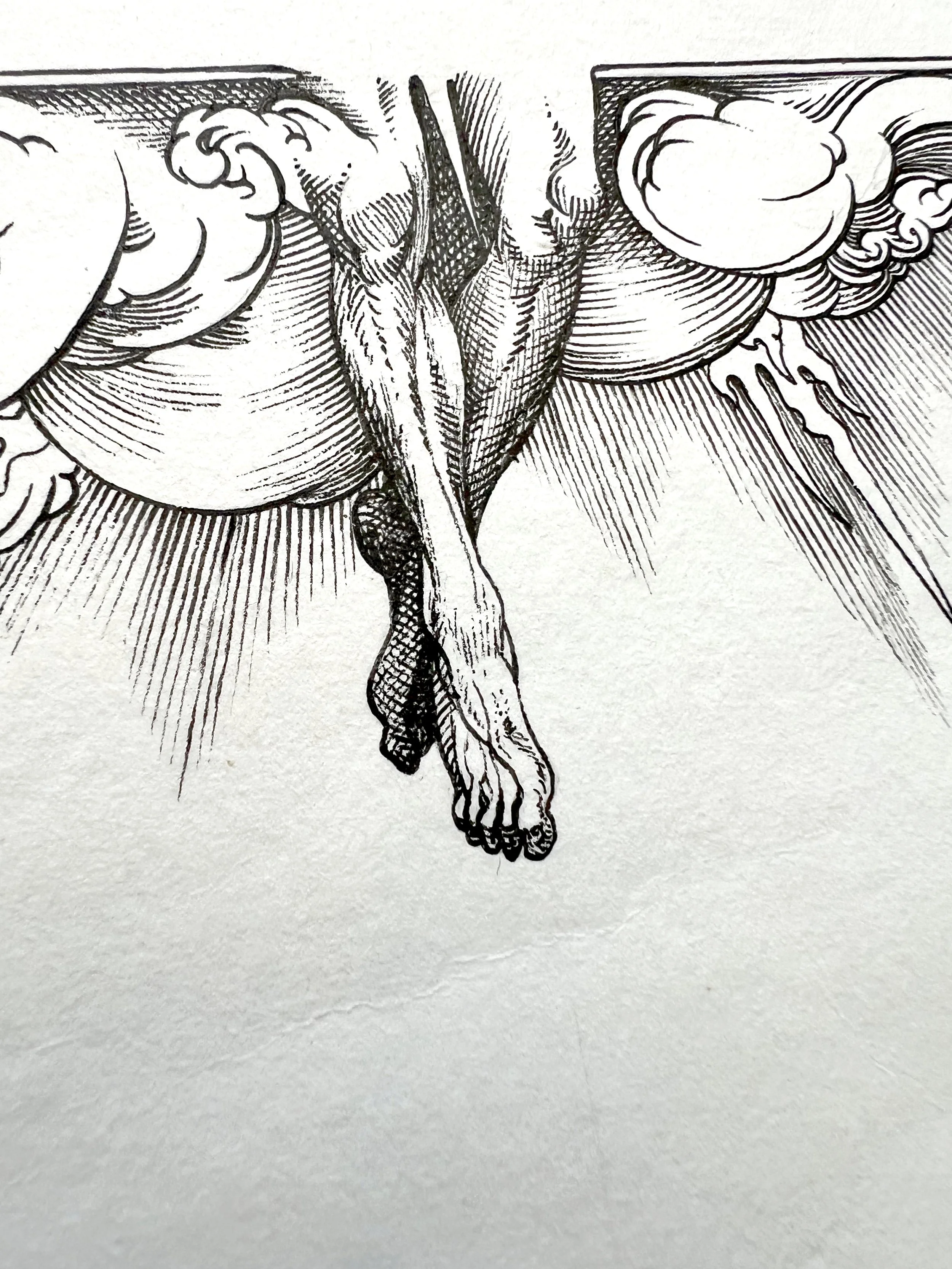
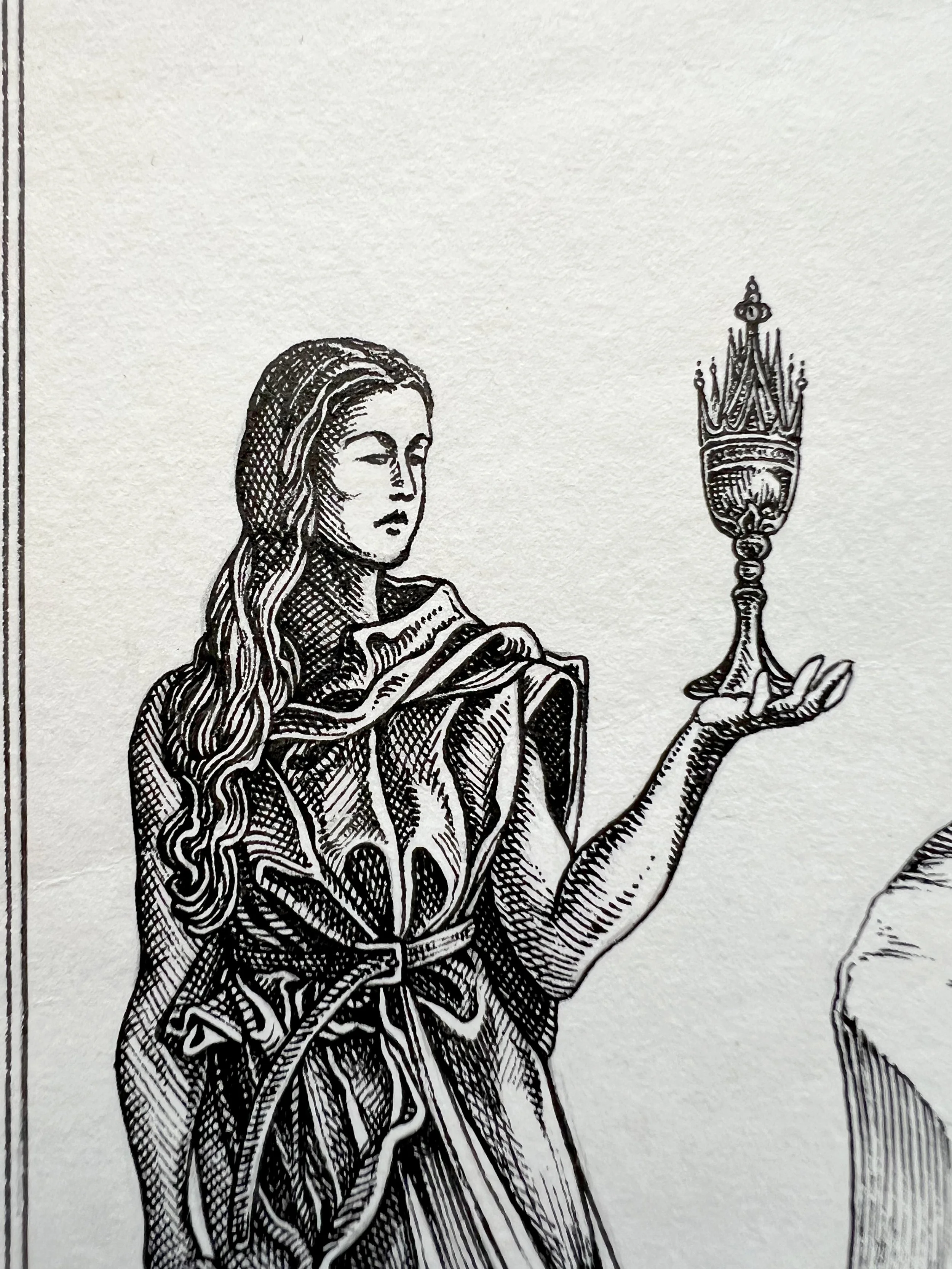
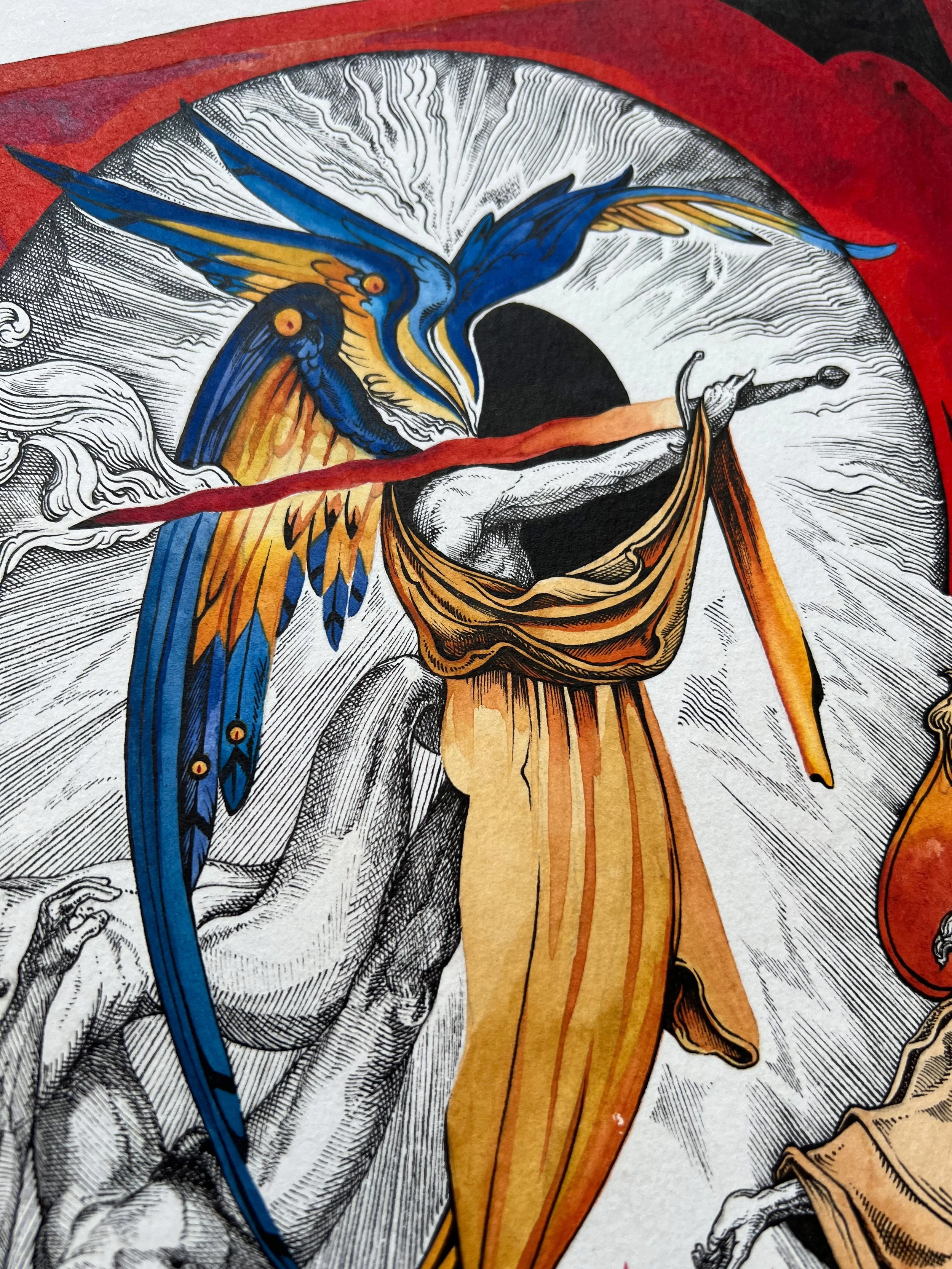
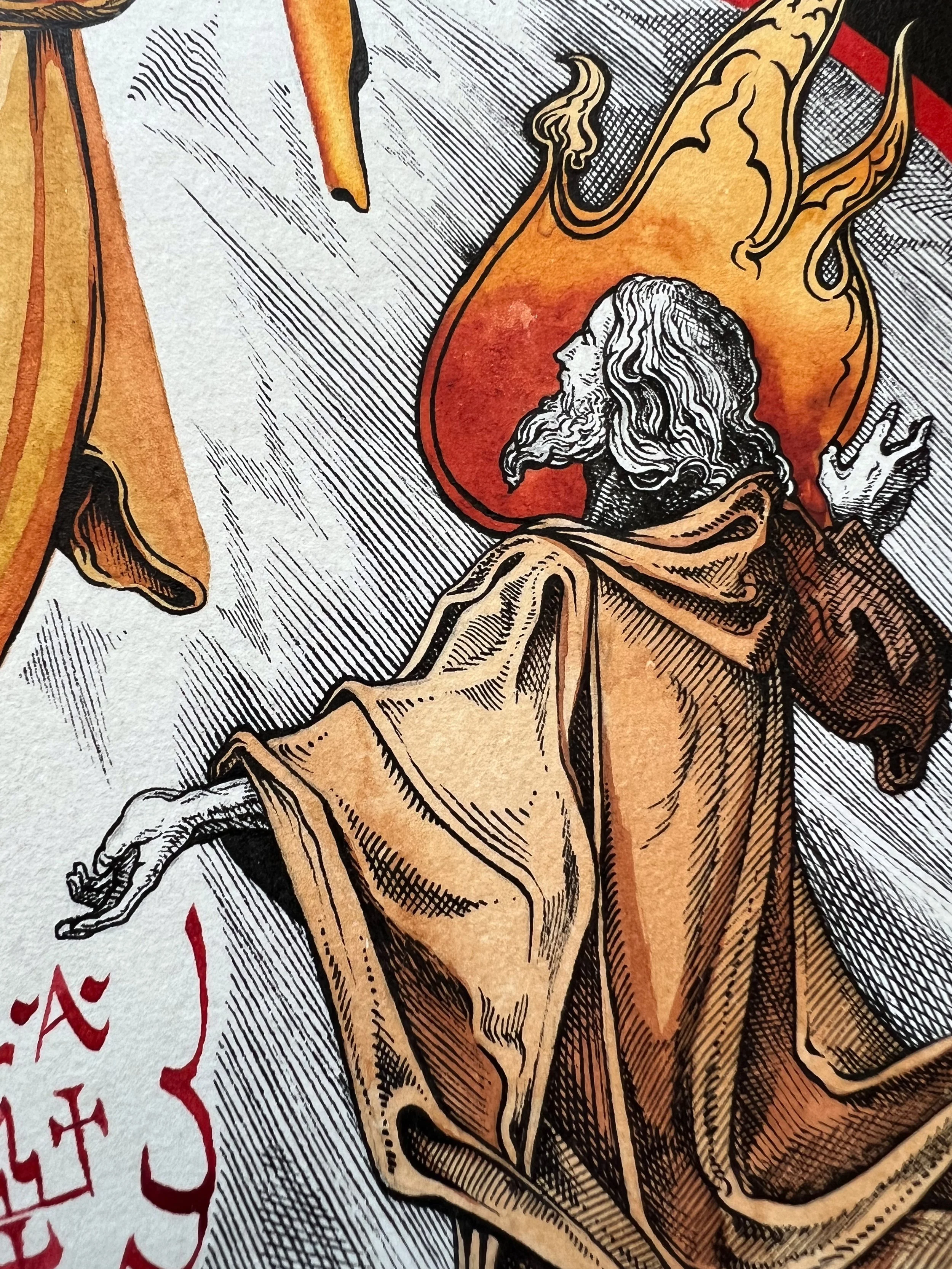
This iconography appears in the Book of Hours of Isabella the Catholic (1495-1500) and in her breviary (1497, British Library, Add. Ms. 18851, fol. 477v); and it might as well have originated as a response to Arianism. Despite their identical appearance, the viewer was expected to recognize the Son to the right based on Psalm 110. The detail that the wings of the dove touch both mouths was used to express the Filioque clause: the Holy Spirit as proceeding from both the Father and the Son in the Latin Creed, while in the Greek version, it proceeds from the Father alone. Despite the emphasis on Jesus’ robe as being one seamless piece, eastern iconography often depicts him wearing blue and red, symbolical of his two natures, human and divine. We have therefore separated the two colors as a reference to the Arian controversy. Was he fully human or fully divine, and how then are they fully identical? They remind us of the syzygy, the sacred twins, one earthly and the other heavenly, Nara and Narayana.
*Sales protocol for these original pieces will be unique in that, after a purchase is made on our website, we will personally reach out to each customer to arrange a customized shipping plan, ensuring both parties are aligned on what can and cannot be done to guarantee safe and smooth delivery of the items.
[This piece has been featured in IAO: Ophite Iconography, p.150.]
Duality is probably the most dangerous concept for Monotheism, and precisely the Trinity has been explained as allowing a regression to unity, since a triangle has a center, how then is this possible?
This iconography appears in the Book of Hours of Isabella the Catholic (1495-1500) and in her breviary (1497, British Library, Add. Ms. 18851, fol. 477v); and it might as well have originated as a response to Arianism. Despite their identical appearance, the viewer was expected to recognize the Son to the right based on Psalm 110. The detail that the wings of the dove touch both mouths was used to express the Filioque clause: the Holy Spirit as proceeding from both the Father and the Son in the Latin Creed, while in the Greek version, it proceeds from the Father alone. Despite the emphasis on Jesus’ robe as being one seamless piece, eastern iconography often depicts him wearing blue and red, symbolical of his two natures, human and divine. We have therefore separated the two colors as a reference to the Arian controversy. Was he fully human or fully divine, and how then are they fully identical? They remind us of the syzygy, the sacred twins, one earthly and the other heavenly, Nara and Narayana.
*Sales protocol for these original pieces will be unique in that, after a purchase is made on our website, we will personally reach out to each customer to arrange a customized shipping plan, ensuring both parties are aligned on what can and cannot be done to guarantee safe and smooth delivery of the items.
Original: 2021
Dimensions: 23.5 cm x 29 cm (9.3” x 11.4”).
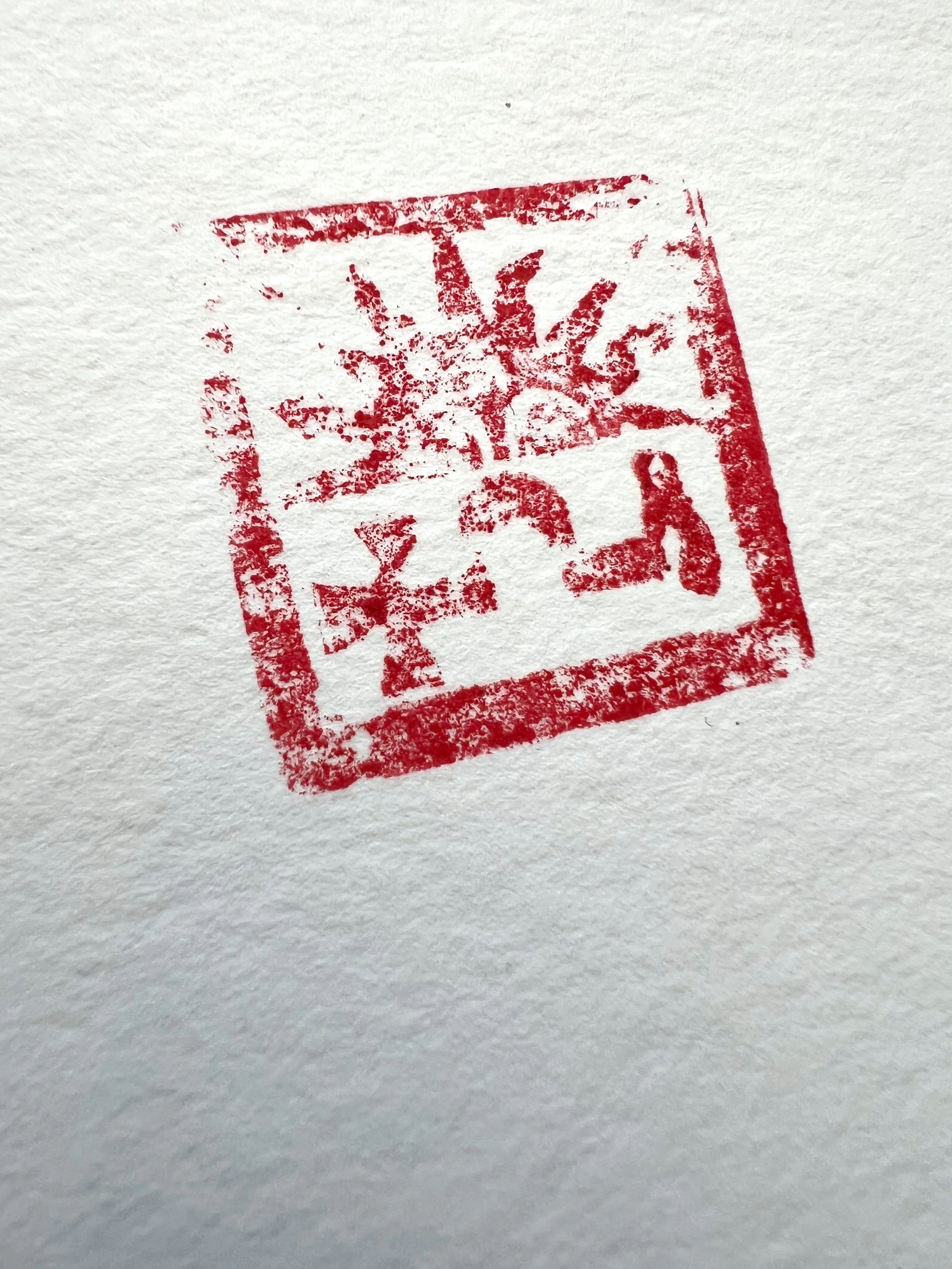
Materials: All pieces are ink and watercolor on Hanhemühle bamboo paper 250mm. Seal ink is composed of cinnabar and castor oil. We strongly encourage you to keep the paper out of direct sunlight and humidity.
Condition: These original artworks may show signs of spotting and minor stains due to the humidity in Peru, as well as from being poorly archived for a period of time. These imperfections are a natural result of their history and environment. *From now on: We strongly encourage you to keep the paper out of direct sunlight and humidity.
Shipping: These artworks must be shipped rolled in sturdy boxes or tubes and will need to be unrolled and flattened before framing.
*Each original artwork comes with Certificate of Authenticity signed by the artist and the publisher.