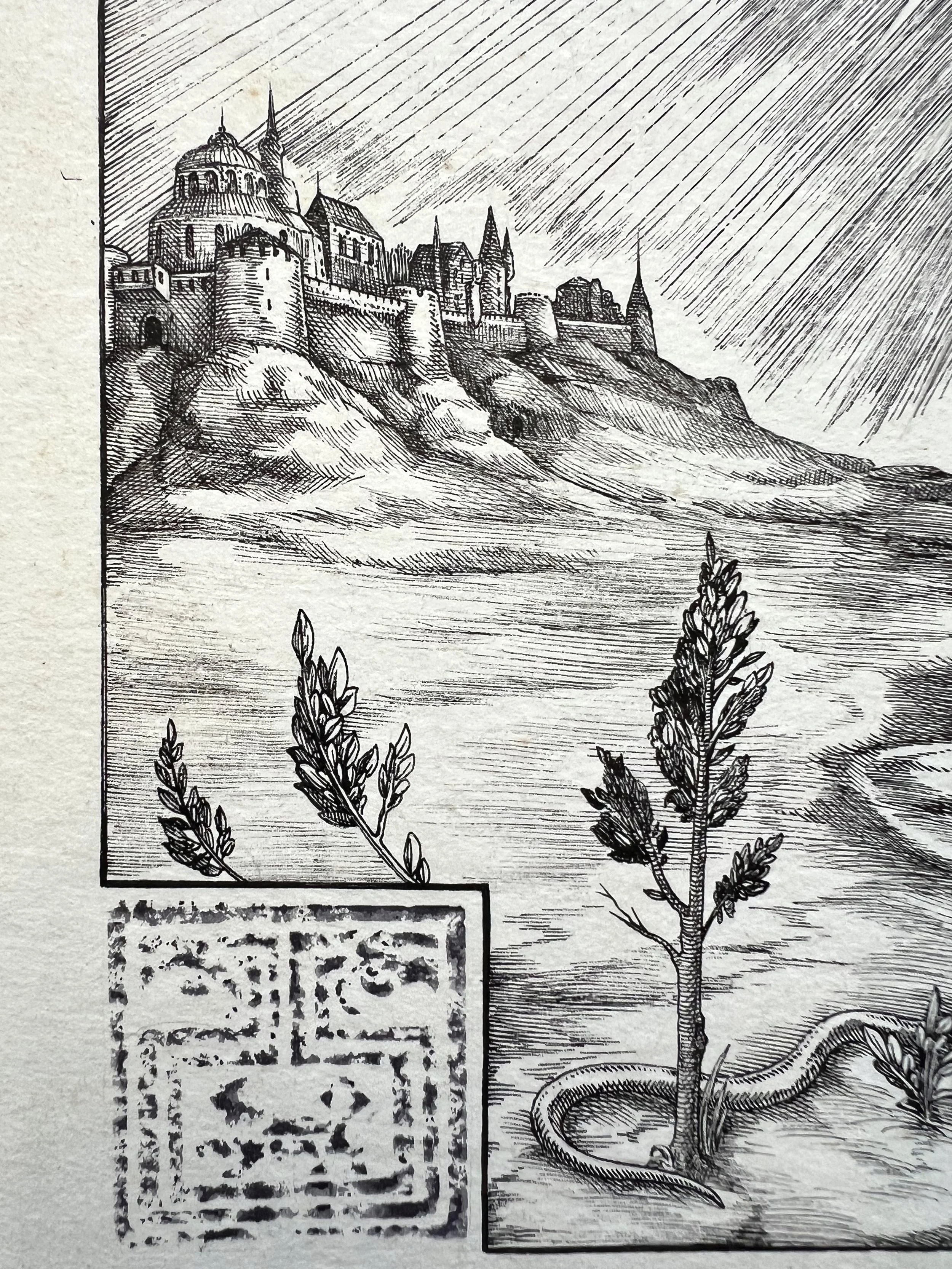
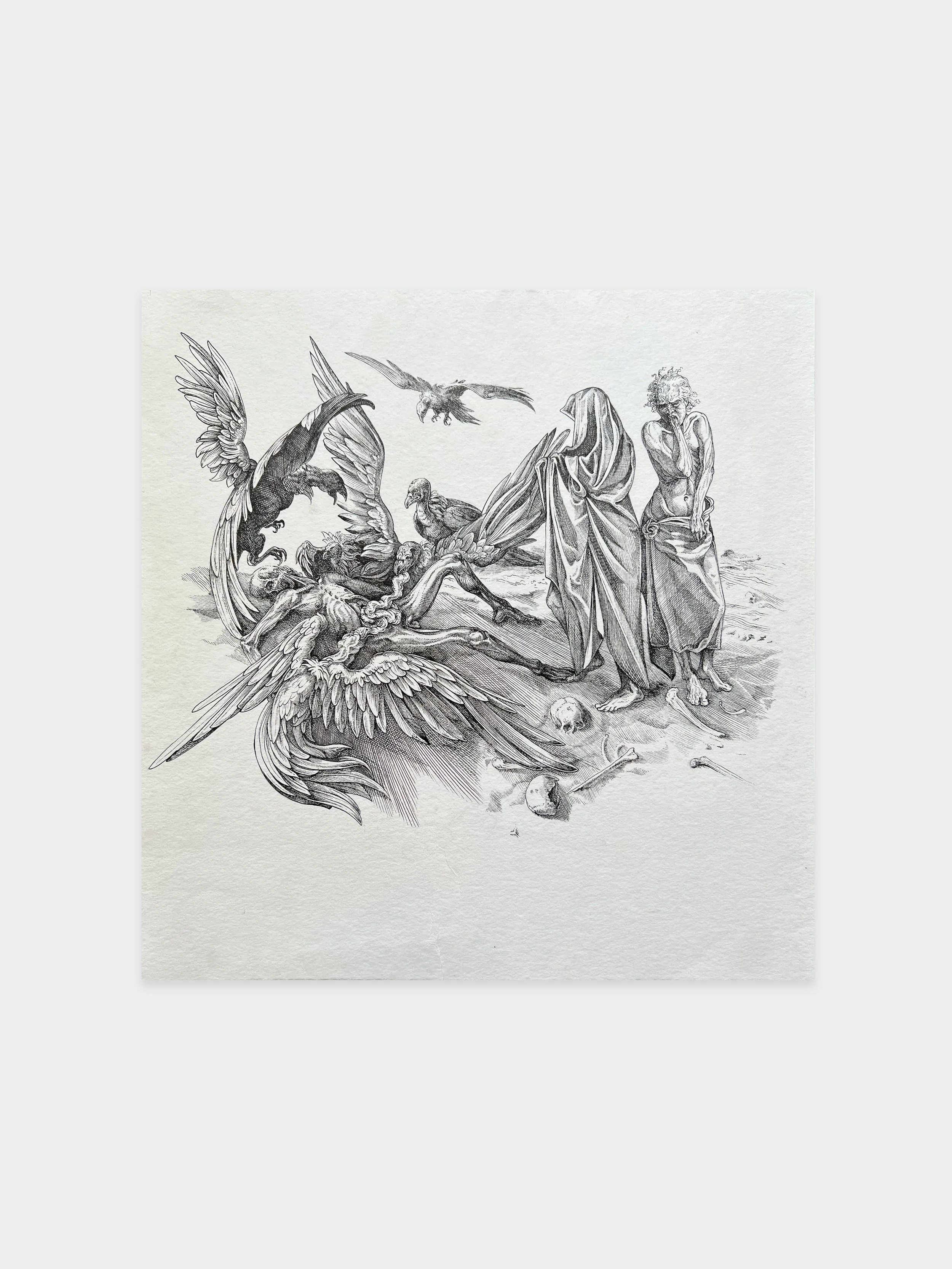
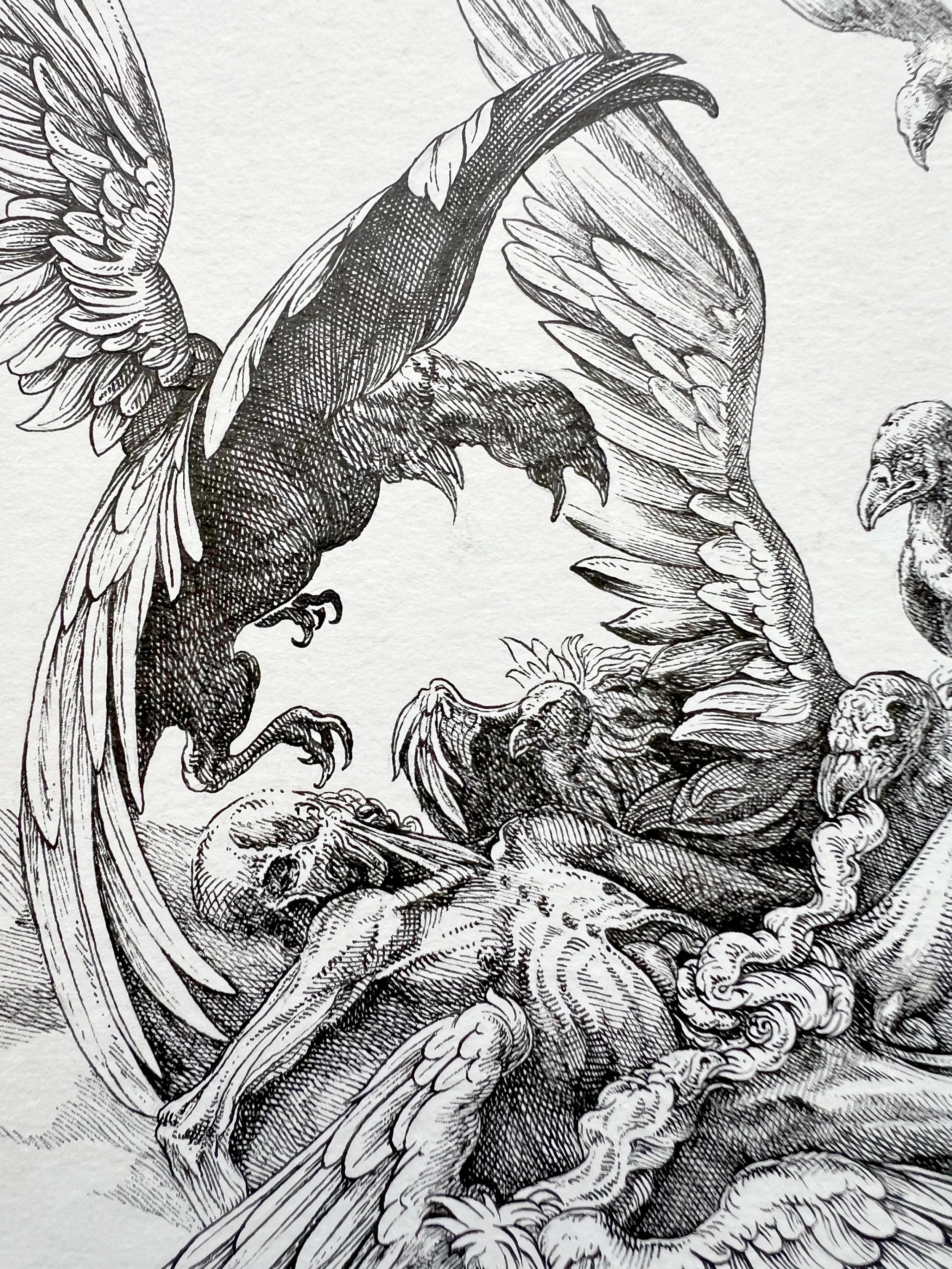
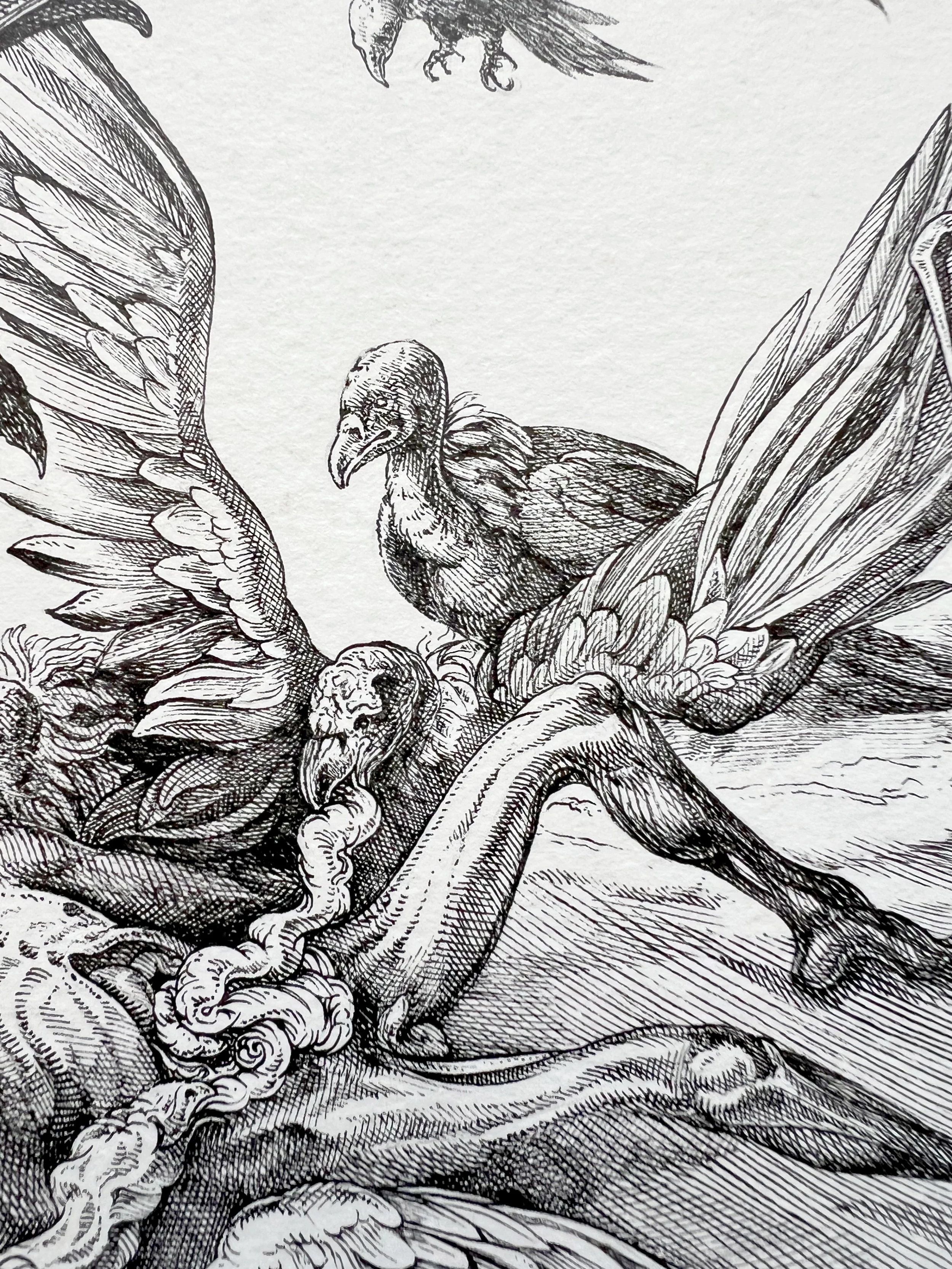
[This piece has been featured in IAO: Ophite Iconography, p.72.]
Marcus the Magus is openly described as a seducer of women and a charlatan by Irenaeus of Lyon.1 This heresiarch and his disciples claimed to be superior to both the apostles Peter and Paul, and to be “ungraspable and invisible to the judge” thanks to the power of their mystical redemption, which consisted in a particular invocation preserved between them.2
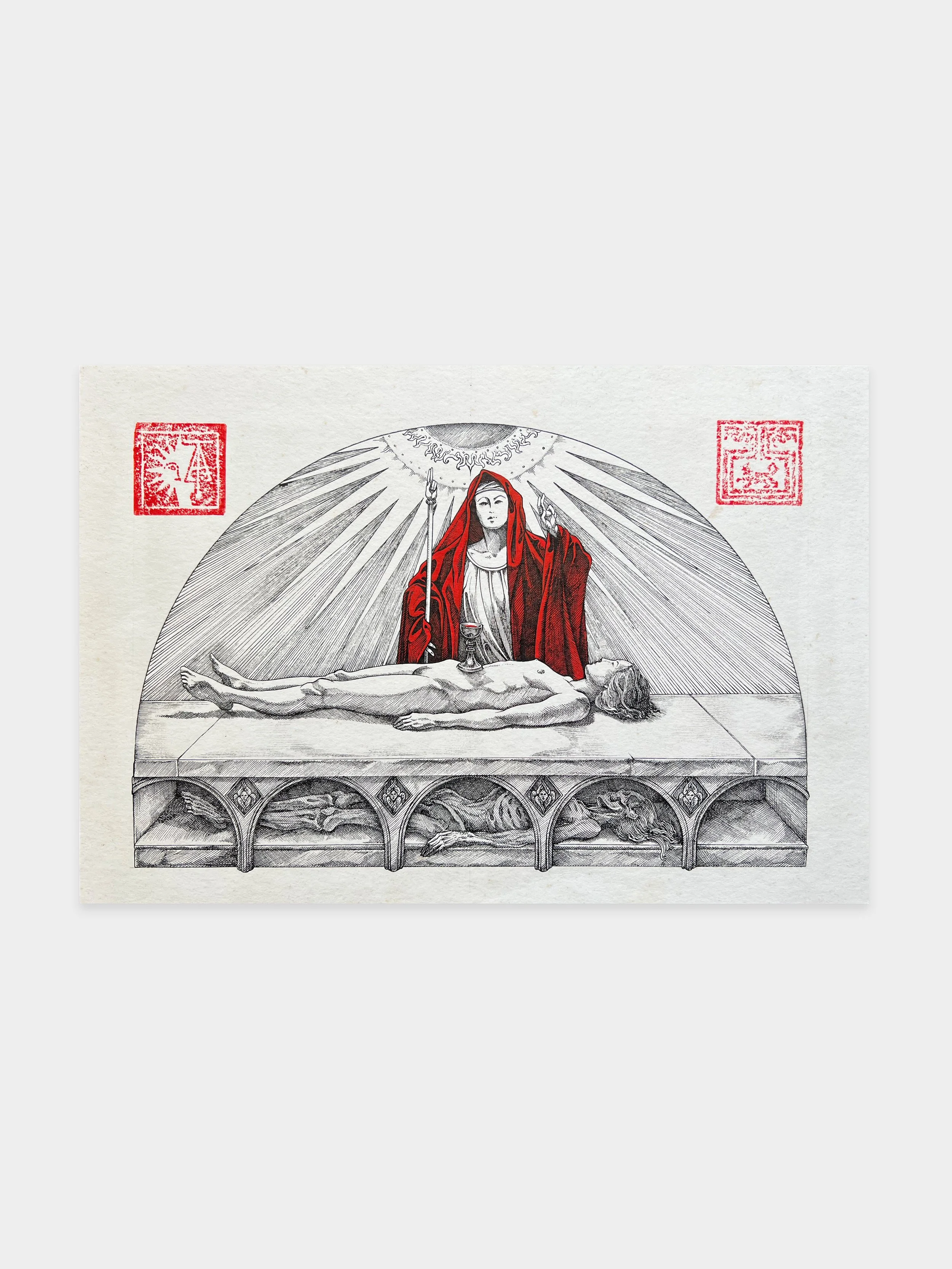
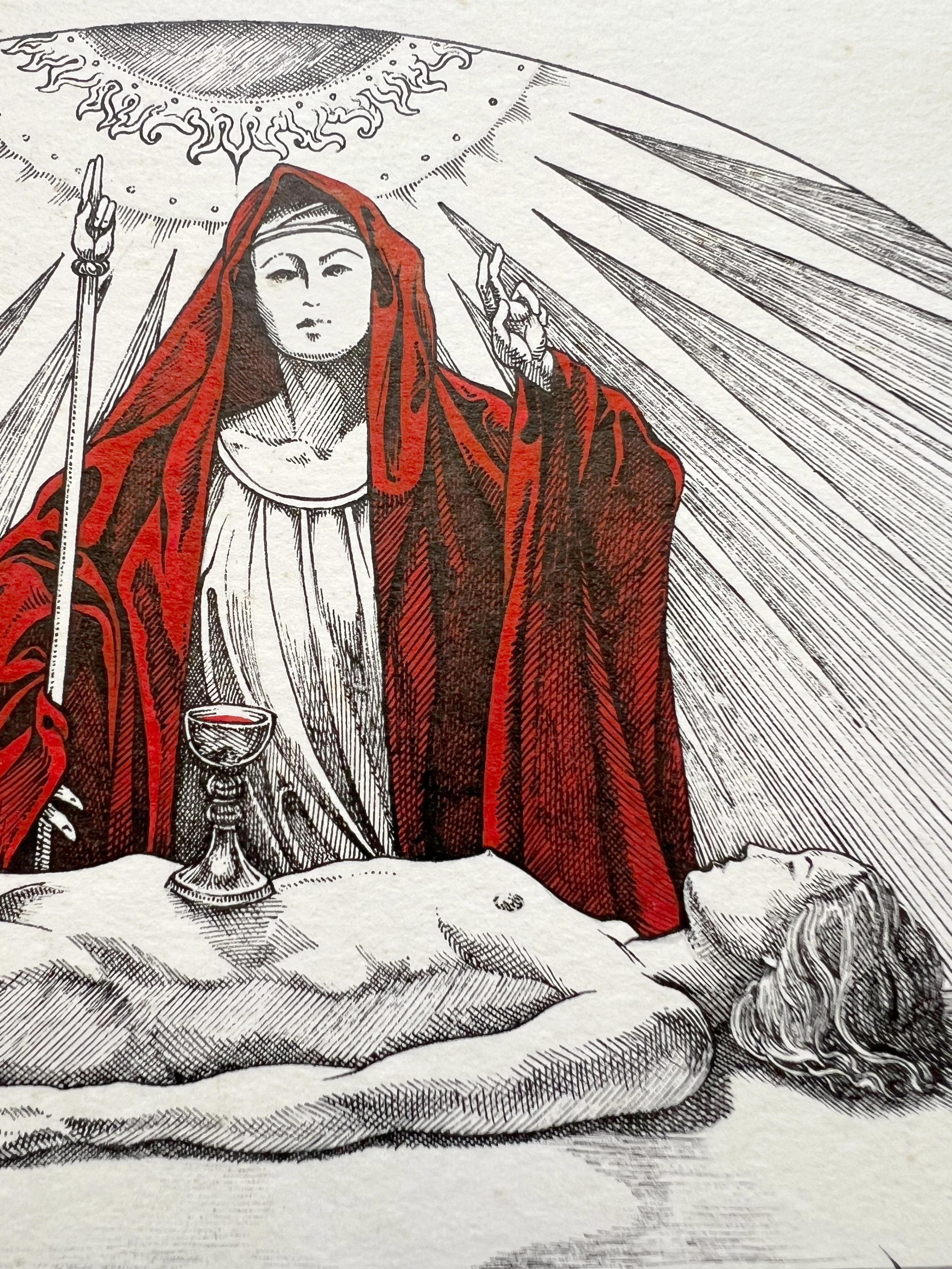
He taught that a sublime Tetrad had descended towards him from the invisible and unnameable places in the form of a woman, because the world could not withstand its masculinity.3 Irenaeus then records a fascinating description of Marcus’ Revelation of Truth, that identifies each letter of the Greek alphabet with a part of the female body of the truth, in the way in which we have tried to depict as accurately as possible.
“After having declared these things, the Tetrad added: I will shew unto thee Truth, whom I have brought down from the celestial mansions that thou shouldest behold her naked, acknowledge her beauty, hear her speaking, and be astonished at her wisdom. Look up therefore at her head Alpha and Ω, at her neck B and Ψ, at her shoulders with her hands Γ and X, at her breasts Δ and P, at her chest E and Y, at her back Z and T, at her belly H and Σ, at her thighs Θ and P, at her knees I and Π, at her legs K and O, at her ankles Λ and Ξ at her feet M and N. This is the body of Truth, this the form of the letters, this the character of the writing. Whereupon Truth looked upon me (Marcus) and opened her mouth, and littered a word, and that word became a Name, a name which we know and speak — Christ Jesus: and having named him she held her peace.”4
But “the restoration of all things will take place when the All had come to one letter only, and it will sound with one and identical pronunciation5.”
1. Los Gnósticos, Volumen I, introducción, traducción y notas de José Montserrat Torrens, (Madrid: Gredos, 1983), p.161
2. Ibid. Pp.164-165.
3. Ibid. P.166.
4. The English translation of this passage by Irenaeus is taken from: King, C.W. The Gnostics and their Remains: Ancient and Mediaeval (London: David Nutt, 1887) pp.287-288.
5. Los Gnósticos, Volumen I, introducción, traducción y notas de José Montserrat Torrens, (Madrid: Gredos, 1983), p.167.
*Sales protocol for these original pieces will be unique in that, after a purchase is made on our website, we will personally reach out to each customer to arrange a customized shipping plan, ensuring both parties are aligned on what can and cannot be done to guarantee safe and smooth delivery of the items.
[This piece has been featured in IAO: Ophite Iconography, p.72.]
Marcus the Magus is openly described as a seducer of women and a charlatan by Irenaeus of Lyon.1 This heresiarch and his disciples claimed to be superior to both the apostles Peter and Paul, and to be “ungraspable and invisible to the judge” thanks to the power of their mystical redemption, which consisted in a particular invocation preserved between them.2
He taught that a sublime Tetrad had descended towards him from the invisible and unnameable places in the form of a woman, because the world could not withstand its masculinity.3 Irenaeus then records a fascinating description of Marcus’ Revelation of Truth, that identifies each letter of the Greek alphabet with a part of the female body of the truth, in the way in which we have tried to depict as accurately as possible.
“After having declared these things, the Tetrad added: I will shew unto thee Truth, whom I have brought down from the celestial mansions that thou shouldest behold her naked, acknowledge her beauty, hear her speaking, and be astonished at her wisdom. Look up therefore at her head Alpha and Ω, at her neck B and Ψ, at her shoulders with her hands Γ and X, at her breasts Δ and P, at her chest E and Y, at her back Z and T, at her belly H and Σ, at her thighs Θ and P, at her knees I and Π, at her legs K and O, at her ankles Λ and Ξ at her feet M and N. This is the body of Truth, this the form of the letters, this the character of the writing. Whereupon Truth looked upon me (Marcus) and opened her mouth, and littered a word, and that word became a Name, a name which we know and speak — Christ Jesus: and having named him she held her peace.”4
But “the restoration of all things will take place when the All had come to one letter only, and it will sound with one and identical pronunciation5.”
1. Los Gnósticos, Volumen I, introducción, traducción y notas de José Montserrat Torrens, (Madrid: Gredos, 1983), p.161
2. Ibid. Pp.164-165.
3. Ibid. P.166.
4. The English translation of this passage by Irenaeus is taken from: King, C.W. The Gnostics and their Remains: Ancient and Mediaeval (London: David Nutt, 1887) pp.287-288.
5. Los Gnósticos, Volumen I, introducción, traducción y notas de José Montserrat Torrens, (Madrid: Gredos, 1983), p.167.
*Sales protocol for these original pieces will be unique in that, after a purchase is made on our website, we will personally reach out to each customer to arrange a customized shipping plan, ensuring both parties are aligned on what can and cannot be done to guarantee safe and smooth delivery of the items.


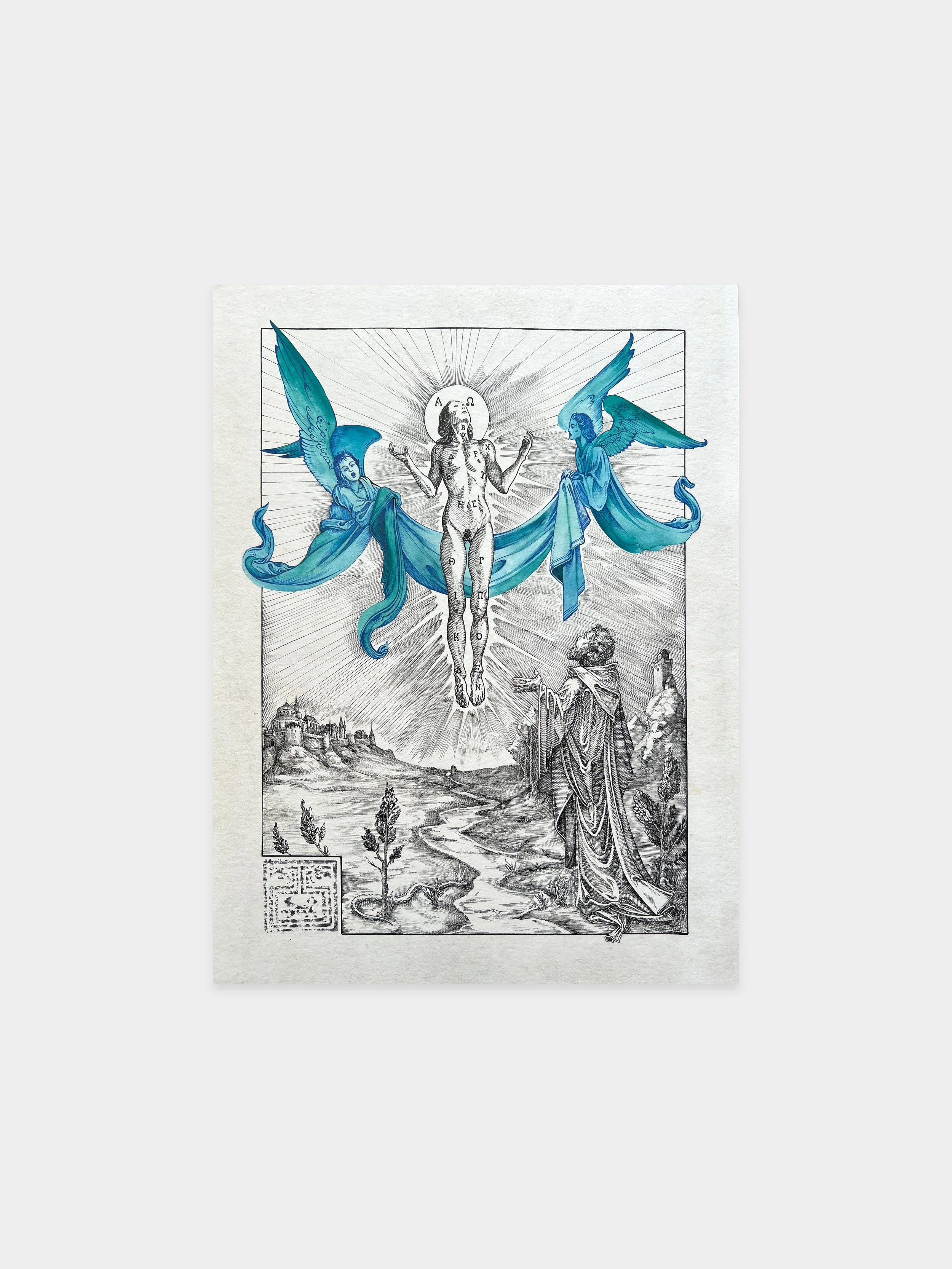 Image 1 of 3
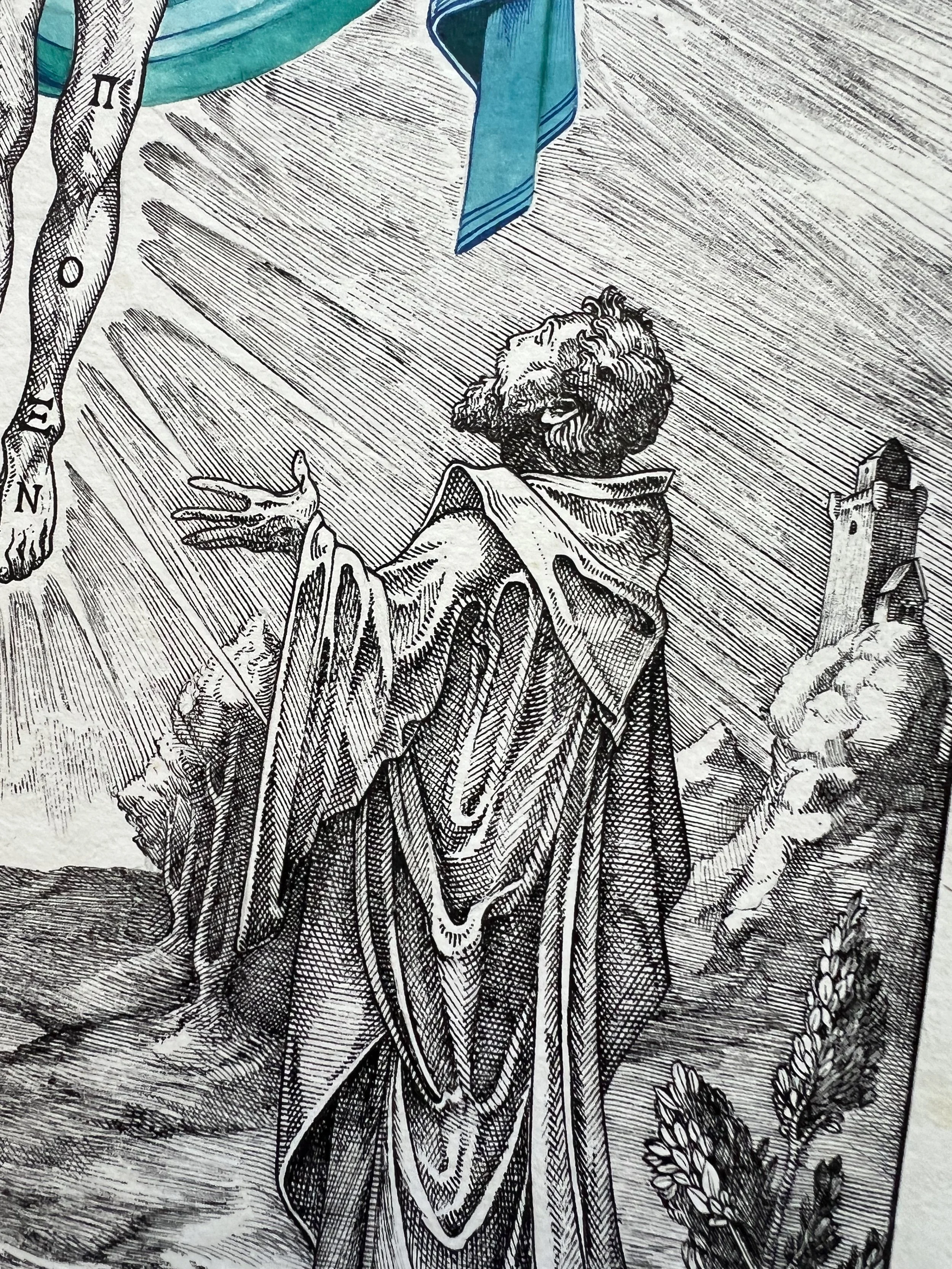 Image 2 of 3
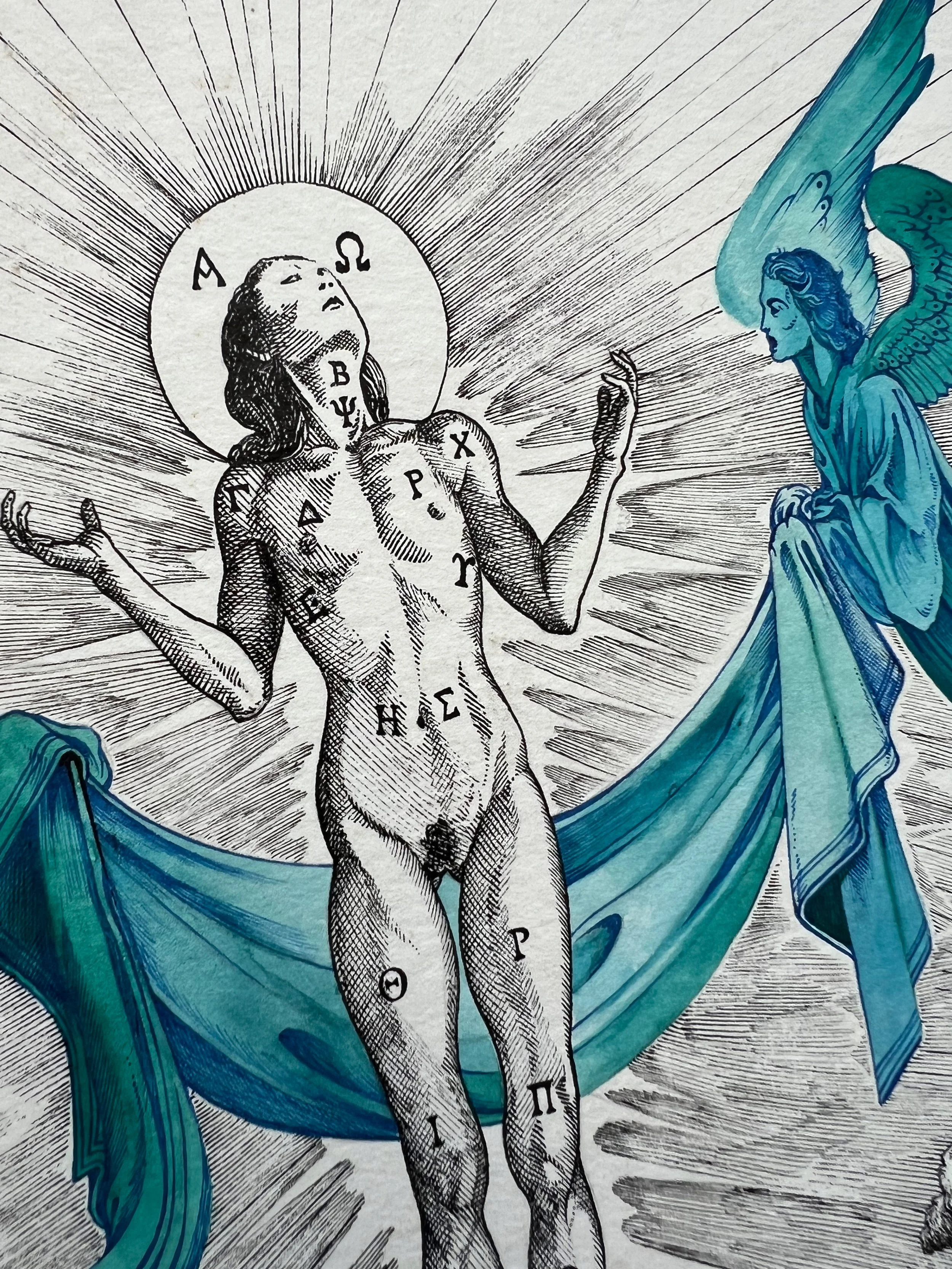 Image 3 of 3